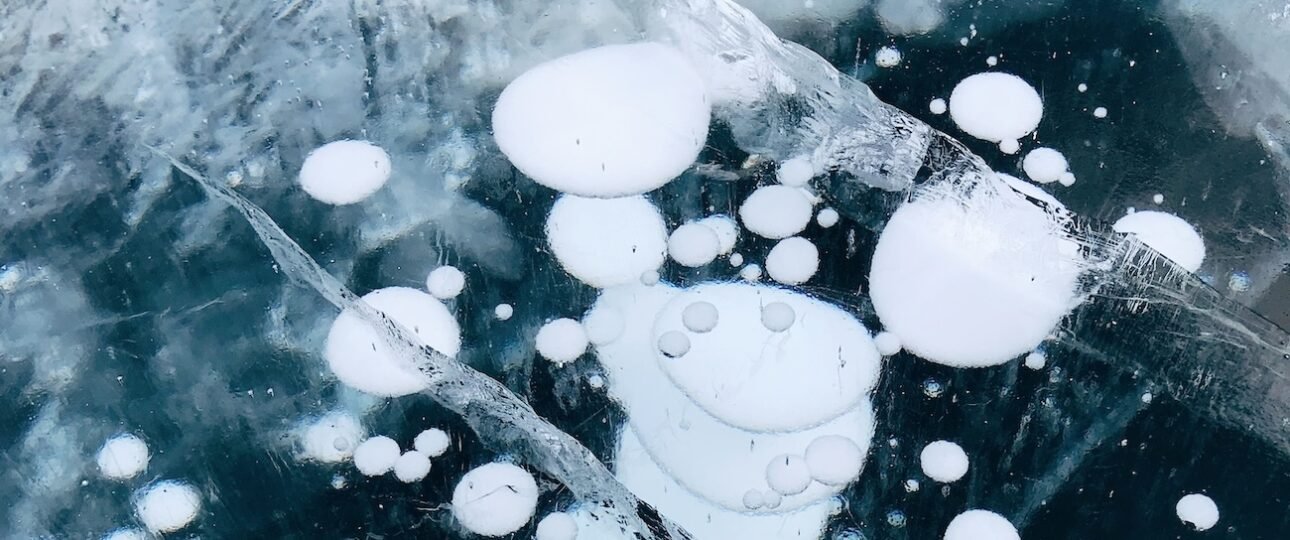
Every winter, Abraham Lake turns into one of Alberta’s most surreal landscapes. Stacked white methane bubbles freeze in columns under clear blue ice, creating patterns that look almost unreal. If you’re planning a trip for the 2027 season, timing and conditions matter more than most people expect.
This guide covers the practical details: when the bubbles are usually at their best, the most reliable spots, how to get there from Calgary or Edmonton, and the safety realities of walking on a large reservoir in deep winter.
What Are Abraham Lake Ice Bubbles?
The bubbles are methane gas released as plants and organic material break down on the lake bottom. Abraham Lake is a large man-made reservoir, so there’s more decaying vegetation trapped under the water than in most natural lakes. As the surface freezes in layers through winter, rising methane gets trapped in clear ice, forming those stacked white columns.
Strong winds in the valley often sweep snow off the ice, which is why the bubbles stay visible here better than at many other Alberta lakes. On a clear day the effect is striking — especially when the low winter sun hits the ice.
Best Time to See Abraham Lake Ice Bubbles in 2027
The prime window is typically mid-January to mid-February. By then the ice is usually thick enough to walk on safely, the bubbles have had time to stack in multiple layers, and the ice is still clear before later snow or warmer spells cloud it.
The lake often starts freezing in late December, but early ice can be uneven. After mid-February conditions become less reliable — snow cover increases and the ice can start to candle or soften on warmer days. Exact timing shifts with the weather each year, so check recent reports before you drive.
Quick tip: Look for a sustained cold period of at least 10–14 days with temperatures well below freezing. Avoid going right after a heavy snowfall; wind usually clears the ice within a few days.
Best Spots to See the Bubbles
Abraham Lake is about 32 km long, so bubbles aren’t equally good everywhere. These are the most consistent viewing areas along Highway 11:
- Preacher’s Point — Often one of the first sections to freeze and a reliable early-season spot near the southern end. Ice can be a bit uneven.
- Belly of Abraham / Ice Bubbles Viewpoint — Popular, accessible parking with good bubble density and flatter shoreline access. Usually one of the busiest spots.
- Abraham Slabs and Hoodoo Creek area — Strong photo opportunities with clear ice and mountain backdrops.
- Cline Landing — Sometimes better early in the season; tends to be a bit more sheltered from the worst wind.
Walk the shoreline and check a couple of pullouts. Conditions vary from one section to the next depending on wind, freeze timing, and recent snow.
How to Get to Abraham Lake

Abraham Lake sits on Highway 11 (David Thompson Highway) between Nordegg and Saskatchewan River Crossing. There is no cell service in much of the area, so download offline maps and fill up before you leave the last town.
Approximate drive times:
- From Edmonton: roughly 3.5 hours (about 340 km) via Highway 2 and Highway 11
- From Calgary: roughly 3.5 hours via Highway 2 north then Highway 11
- From Banff / Lake Louise: about 2.5 hours via the Icefields Parkway (Highway 93) then east on Highway 11
Winter driving notes: Highway 11 is generally well maintained, but black ice, wind, and occasional closures happen. Check 511 Alberta before you leave. Last reliable fuel and services are in Nordegg or Rocky Mountain House if you’re coming from the east. If you’re combining this with a longer Rockies trip, our Calgary to Banff road trip guide covers useful winter driving context for the broader region.
Abraham Lake Ice Safety for 2027
Walking on any lake ice carries risk, and Abraham Lake is a reservoir, so water levels drop through the winter. That can create air gaps or unstable ice near steep banks and some shoreline sections. Most issues happen close to shore rather than far out on thick ice.
Basic safety practices:
- Check recent ice reports from local operators (Canadian Rockies Escapes and Nordegg Adventures post regular updates)
- Aim for at least 15 cm of clear ice for walking (more if you’re in a group)
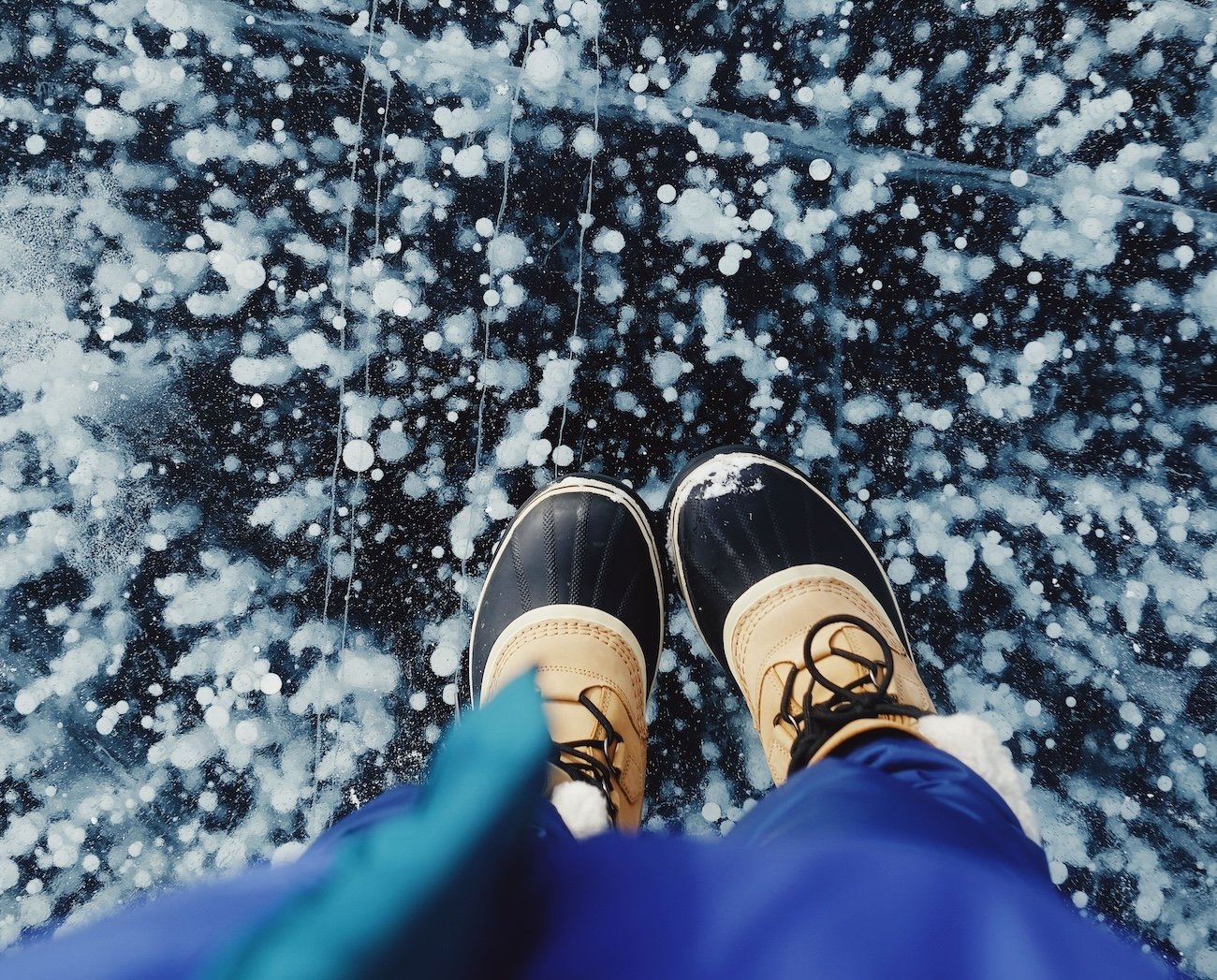
- Wear microspikes or crampons — the ice is often polished and the approach can be slippery
- Stay on flatter shoreline areas and avoid steep banks, pressure ridges, and any open water or grey/slushy ice
- Never go alone, and tell someone your plans
Guided ice walks are available through local operators if you prefer someone who checks the ice daily. For wildlife considerations on winter drives and stops in the Rockies, see our guide to wildlife safety tips for hiking in Alberta.
What to Bring
- Microspikes or ice cleats (essential)
- Warm layers, windproof outer shell, and good gloves — it gets cold fast when you’re standing still
- Sunglasses (glare off the ice is intense)
- Camera or phone with extra battery (cold drains them quickly)
- Optional: ice screw or pole to test thickness, hot drinks, and a shovel if snow is patchy
Photography Tips
Sunrise and late afternoon light usually give the best contrast and colour on the bubbles and mountains. Get low to the ice for foreground interest. A wide-angle lens works well, and a tripod (or inverted centre column) helps for low angles. Be careful not to scuff the best bubble patches with your spikes.
Nearby Stops Around Nordegg
Nordegg is the closest community and makes a practical base. Crescent Falls is a short detour and often worth a stop if the road is open. If you’re exploring the area longer, the David Thompson Country region has cabins, trails, and other winter options. For more on the area, check our piece on Nordegg wedding venues — many of the same logistics apply for winter visits. If you’d rather stay overnight instead of doing a long day trip, look at our roundup of the best cabins and lodges in the Canadian Rockies.
FAQs
Are the Abraham Lake ice bubbles guaranteed every year?
No. The bubbles form most winters, but visibility depends on clear ice and limited snow cover. Some years are better than others.
Can you see the bubbles without a tour?
Yes. Several roadside pullouts give access. Just check current conditions, wear proper traction, and stick to safer shoreline areas.
How cold does it get?
January and February are typically the coldest months. Daytime temperatures often sit well below –10°C, and wind makes it feel colder. Dress for standing still on ice.
Is it safe to skate?
Some people skate near popular access points when the ice is thick and clear, but conditions change. Confirm thickness and stability first, and stay in areas that local reports confirm are solid.
Plan Your 2027 Visit
Abraham Lake’s ice bubbles are worth the drive when conditions line up. Aim for the mid-January to mid-February window, check recent ice reports, bring microspikes, and give yourself time to try more than one spot. The combination of clear ice, stacked bubbles, and mountain light is one of the more unique winter experiences in Alberta.
Before you go, review current conditions and pack for cold and wind. For more Alberta winter road-trip ideas and local guides, explore the rest of Alberta Insider.