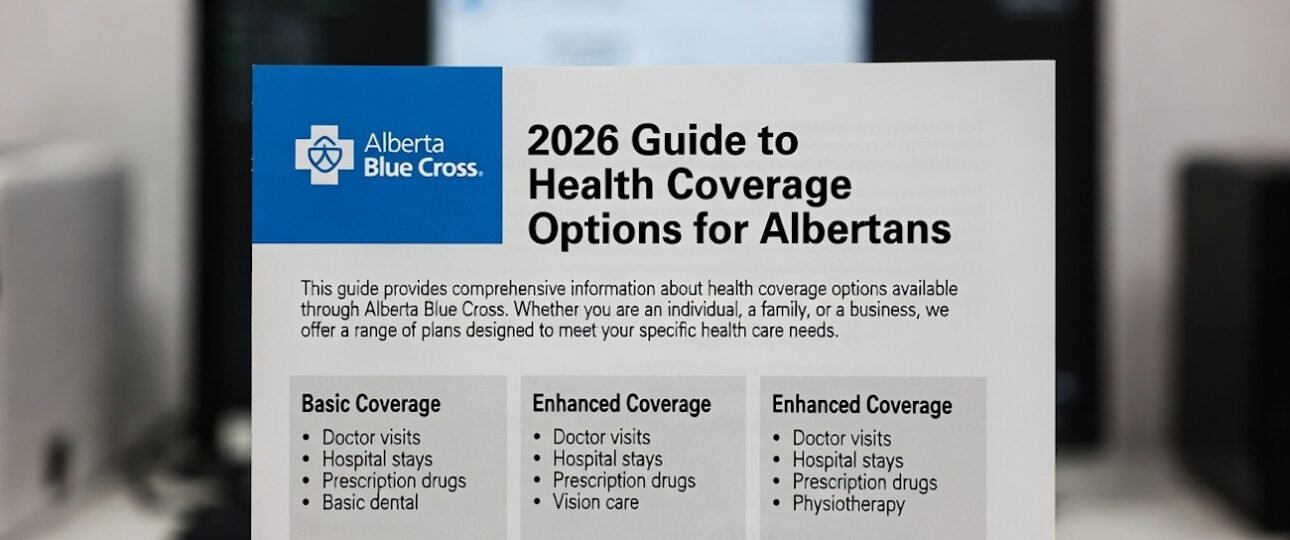
If you live in Alberta and don’t have workplace benefits (or you’re about to lose them), you’ve probably heard of Alberta Blue Cross. It’s the main player for supplementary health coverage in the province — both the government-run programs and their own personal plans.
This guide gives you the clear, up-to-date picture for 2026. No jargon. Just what the plans actually cover, what they cost right now, and whether they’re worth the money for your situation. It pairs well with our broader Health Quality Alberta guide if you’re trying to understand the full healthcare landscape here.
The Three Types of Alberta Blue Cross Coverage
Alberta Blue Cross runs three main options that most people deal with:
- Non-Group Coverage – the government program for people under 65
- Coverage for Seniors – the government program for people 65 and older
- Personal plans – Blue Choice, Blue Assured, Young Adult, and Retiree plans that you buy yourself
Let’s break each one down.
1. Non-Group Coverage (The Government Plan for Under 65)

This is the plan most people mean when they say “Alberta Blue Cross.” It’s administered by Alberta Blue Cross on behalf of the Government of Alberta.
Who can get it Any Alberta resident under 65 who is registered with the Alberta Health Care Insurance Plan (AHCIP), plus their eligible dependants. This includes many newcomers — if you’re just arriving, check our Moving to Alberta 2026 Ultimate Newcomer Guide for the full checklist that includes health coverage steps.
2026 Monthly Premiums
| Coverage | Full Premium | Subsidized Premium |
|---|---|---|
| Single | $63.50 | $44.45 |
| Family | $118.00 | $82.60 |
Subsidies are based on taxable income. Single people under roughly $21,000 and families under roughly $33,000–$39,000 (depending on whether they have kids) can qualify for the lower rate.
What Non-Group actually covers

- Prescription drugs listed on the Alberta Drug Benefit List (you pay 30% co-pay, maximum $35 per prescription starting April 1, 2026)
- Diabetes supplies (up to $2,400 per person per benefit year)
- Ground ambulance
- Limited psychology services ($60 per visit, $300 family maximum per year)
- Limited home nursing care ($200 family maximum)
- Some prosthetic and orthotic devices
- The extra cost of a private or semi-private hospital room
What it does not cover
- Dental
- Vision
- Massage, physiotherapy, chiropractic (except limited chiro under the seniors plan)
- Most other paramedical services
- Travel insurance
There’s a $50 annual deductible that applies to most benefits except drugs and diabetes supplies.
How to apply
Fill out the application on the Alberta government site (search “Application for Alberta Blue Cross Non-Group Coverage”). Coverage usually starts on the first day of the fourth month after they receive your application, unless you had previous coverage that ended recently.
2. Coverage for Seniors (65+)

Once you turn 65 and your age is validated with AHCIP, this coverage is added automatically. There is no premium.
It includes the same core drug and diabetes coverage as Non-Group, plus limited chiropractic services (up to $200 per person per year). Everything else remains limited — no dental, limited paramedical, no travel.
Many seniors still buy a personal plan on top of this for better coverage. For the full picture of what else is available once you hit 65, see our detailed Alberta Seniors Benefit 2026 guide.
3. Personal Plans (Blue Choice, Blue Assured, etc.)
These are the plans you buy directly from Alberta Blue Cross if you want more than the basic government coverage.
Main options in 2026:
- Blue Choice – Medically underwritten (you answer health questions). Available up to age 64. Higher drug maximums (up to $10,000), optional dental (up to $2,000), extended health benefits (massage, physio, vision, etc.), and travel coverage.
- Blue Assured – Guaranteed acceptance, no medical questions. Available at any age. Slightly lower maximums than Blue Choice but still much stronger than Non-Group.
- Young Adult – For people 29 and under. Guaranteed acceptance and lower rates. Students may also want to cross-check Alberta Student Aid 2026 for other supports.
- Retiree plan – Designed for people 50+ who are leaving a group plan. Good travel coverage and higher dental options.
All personal plans include free virtual care through TELUS Health and access to the Alberta Blue Cross member app for easy claims.
Non-Group vs Personal Plans – Quick Comparison
| Feature | Non-Group (Government) | Personal Plans (Blue Choice / Assured) |
|---|---|---|
| Monthly cost (single) | $63.50 / $44.45 | Higher (varies by age & coverage) |
| Drug maximum | Limited | Up to $5,000–$10,000 |
| Dental | No | Optional (up to $2,000+) |
| Massage / Physio | No | Yes (extended health) |
| Vision | No | Yes |
| Travel | No | Yes (limits vary) |
| Medical questions | None | Required for Blue Choice |
| Best for | Basic safety net | People who want real coverage |

Is Alberta Blue Cross Non-Group Worth It in 2026?
This is the question that comes up constantly on Reddit and local Facebook groups.
It’s usually worth it if:
- You or someone in your family takes regular prescription medication
- You have diabetes or expect ambulance / hospital needs
- You qualify for the subsidized rate
- You’re between jobs or self-employed and need a temporary safety net
It’s often not worth it if:
- You’re young, healthy, and rarely use the health system
- Your main needs are dental, vision, or massage
- You’re paying the full family rate ($118/month = $1,416/year) and your claims are consistently lower than that
A common real-world calculation people run: a family paying roughly $5,000 a year in premiums sometimes finds that Alberta Blue Cross paid out a similar amount in a high-claim year. In low-claim years, they feel like they’re losing money. That’s normal for insurance — you’re paying for protection, not a guarantee of breaking even.
Healthcare costs are one piece of the bigger affordability puzzle. If you’re weighing overall expenses in Calgary or elsewhere, our pieces on Is Calgary Still Affordable in 2026? and Cost of Living in Red Deer Alberta 2026 put the numbers in context.
Families should also factor in housing and neighbourhood choice — see Best Neighborhoods in Edmonton for Families 2026 and Cheap Apartments in Edmonton for Newcomers.
How to Submit Claims and Manage Your Coverage
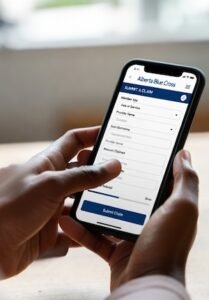
The easiest way is the Alberta Blue Cross member app. You can photo your receipts and submit most claims right from your phone. Direct deposit is available so reimbursements go straight into your bank account.
You can also submit claims through the member website or by mailing a paper form (slower).
2026 Change to Watch – Alberta Blue Cross
The maximum co-pay on prescription drugs under both Non-Group and Coverage for Seniors is rising to $35 (from the previous lower maximum). This change is fully in effect as of April 1, 2026.
FAQ – Alberta Blue Cross
Does Non-Group cover dental?
No.
Can I have Non-Group and a workplace plan at the same time?
Generally no. Non-Group is meant for people without other group coverage.
What happens when I turn 65?
Coverage for Seniors is added automatically (once your age is validated). Non-Group ends. Full details on related supports are in our Alberta Seniors Benefit 2026 article.
How do I get the premium subsidy?
Apply through the forms on Alberta.ca. It’s based on your taxable income from your tax return.
Can I cancel Non-Group and re-apply later?
Yes, but there is usually a waiting period before coverage starts again, and any outstanding premiums must be paid first.
Bottom Line for Albertans in 2026
Non-Group Coverage is a solid, relatively affordable safety net for prescription drugs and a few other basics. It is not comprehensive insurance. If you need dental, vision, massage, or higher overall coverage, you’ll almost certainly want to look at a personal plan (or a combination of both).
The smartest move is to run the numbers for your household: list your expected drug costs, dental needs, and any regular therapies, then compare that against the premiums.
If you recently lost group benefits, just moved to Alberta, or are turning 65, Alberta Blue Cross will almost certainly be part of your solution — just make sure you’re on the right version of it. For the bigger picture on settling in, start with the Moving to Alberta 2026 guide and our Health Quality Alberta overview.