Every year, millions of visitors book accommodation in Banff townsite without ever considering the alternative sitting 25 kilometres down the highway. Canmore is quieter, more affordable, less crowded, and in many respects more authentically connected to the mountain landscape around it. It sits just outside the national park boundary — which turns out to be an advantage more often than a limitation. Here is the case for making Canmore your base for exploring the Canadian Rockies.
The Price Difference Is Significant
This is usually the first thing people notice when they start comparing options. A hotel room in Banff townsite in July can cost two to three times what an equivalent room costs in Canmore for the same night. The same gap applies to short-term rentals, dining, and in many cases gear hire. Banff operates inside a national park with tightly controlled commercial development, which keeps the townsite charming but also keeps prices elevated. Canmore is a regular Alberta municipality with a competitive hospitality market. The savings over a week-long trip can be substantial — enough to fund several extra days in the mountains.
Banff Is 25 Minutes Away
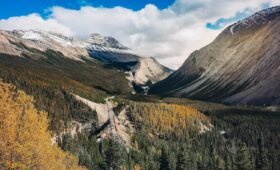
The single most common objection to staying in Canmore is that you are not in the park. In practice, this matters very little. The drive from central Canmore to Banff townsite is approximately 25 minutes on the Trans-Canada Highway. Lake Louise is around 70 minutes. The Icefields Parkway, Moraine Lake, and Johnston Canyon are all within comfortable day-trip range. You will need a Parks Canada Discovery Pass for your vehicle, which you can purchase online in advance or at the park gate — it covers both Banff and Jasper and is valid for a full year. The pass cost is a one-time overhead that disappears quickly against the savings on accommodation.
Canmore Has Its Own Exceptional Trails

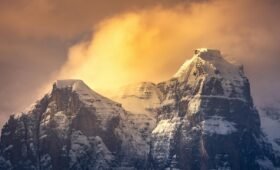
Staying in Canmore does not mean sacrificing trail access. The town sits at the mouth of the Bow Valley, ringed by peaks that offer some of the finest hiking in the Rockies entirely outside the national park. The Ha Ling Peak trail is a classic — a demanding 6 km return climb to a summit with panoramic views of the Three Sisters, the Bow Valley, and the distant Banff peaks. The Three Sisters themselves offer multiple trail options for varying fitness levels. Grassi Lakes is one of the most rewarding short hikes in the region, reaching two brilliant turquoise lakes in under 2 km each way. And the Canmore Nordic Centre, built for the 1988 Winter Olympics, has an extensive trail network through the forest for hiking and mountain biking in summer.
The Town Itself Has More Character

Banff townsite is undeniably beautiful, but it is also unambiguously a tourist town — the majority of its businesses exist to serve visitors, and the atmosphere reflects that. Canmore has a more layered identity. It was a coal mining town before it became a mountain resort, and traces of that history give it a grittiness and authenticity that purpose-built tourist destinations rarely have. Main Street has independent bookshops, locally owned cafés, craft breweries, and restaurants run by people who actually live in the valley year-round. The Saturday farmers market through summer draws a genuinely local crowd. You are less likely to feel processed through an experience and more likely to feel like you are somewhere real. Read more about Banff nightlife here.
Wildlife Encounters Happen Right in Town
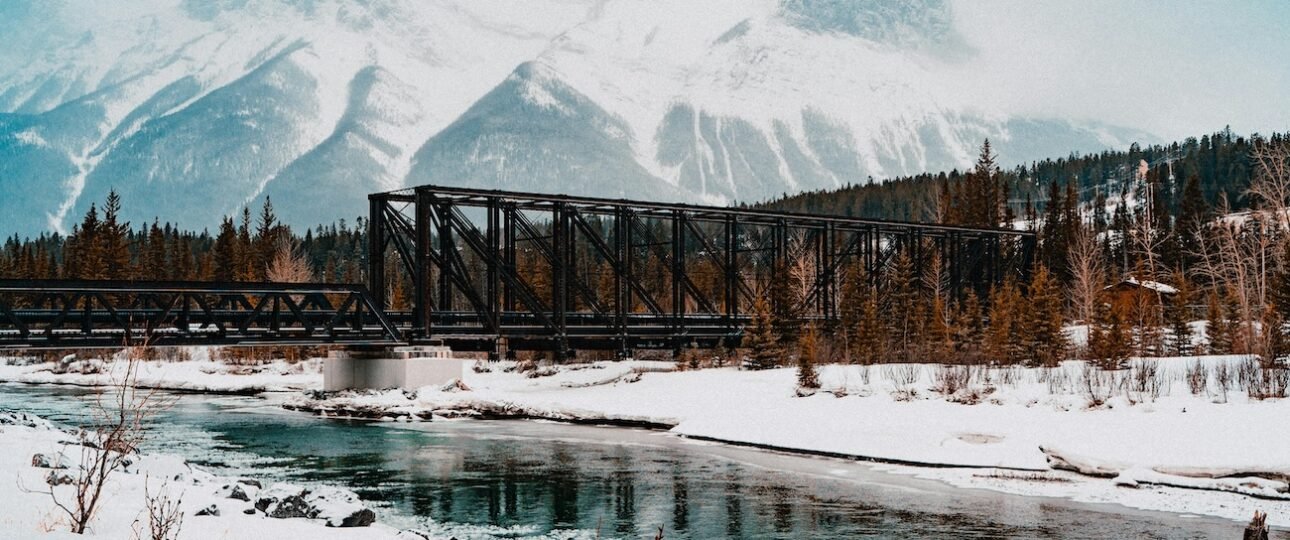
Banff townsite has wildlife — elk wander the streets regularly, and bears are spotted in the surrounding area throughout the season. But Canmore’s position at the edge of a critical wildlife corridor means encounters can be remarkably close and frequent. The Bow River pathway that runs through town is a known movement route for wolves, cougars, grizzly bears, and elk. The Three Sisters area regularly has bear activity from spring through autumn. This is not a selling point for everyone, but for visitors who want to feel genuinely embedded in mountain wilderness rather than adjacent to it, Canmore delivers that feeling with unusual immediacy.
Better Access to Kananaskis Country
One of Canmore’s most underrated advantages is its proximity to Kananaskis Country — the vast provincial park system that stretches south and west of the town. Kananaskis receives a fraction of the visitor numbers that Banff does, yet offers comparable scenery and trail quality. Peter Lougheed Provincial Park, about 45 minutes from Canmore via Highway 40, is a particular highlight — the Upper and Lower Kananaskis Lakes are among the most beautiful bodies of water in Alberta, rivalling anything inside the national park boundary. From Banff, Kananaskis is technically accessible but feels like a detour. From Canmore, it is practically on your doorstep.
Quieter Mornings and Evenings
One of the less obvious costs of staying in a very popular tourist town is that the experience of being there is shaped by crowds at almost every hour. Banff townsite in July is busy from early morning until late at night — the main street, the trails close to town, the hot springs, the gondola queue. Canmore empties noticeably in the evenings as day visitors return to Calgary or their Banff hotels. The riverside paths are quiet by 7 p.m. The restaurants feel unhurried. The mountains are still right there. For travellers who find constant tourist-town energy draining, this difference in atmosphere is genuinely restorative.
It Is a Real Mountain Community
Canmore has a permanent population of around 15,000 people who have chosen to live at the foot of the Rockies year-round. That population includes professional athletes, artists, guides, tradespeople, and families — and the town has the infrastructure of a real community rather than a resort: a proper grocery store, a hospital, schools, a library, community events. This sounds mundane until you have spent several days in a tourist-only environment and start craving a coffee shop where the staff are not exhausted by an endless stream of visitors asking where the gondola is. Canmore has that quality. It feels inhabited in a way that makes longer stays genuinely comfortable.
When Banff Town Is Still the Right Choice
Canmore is not the right answer for everyone. If you are visiting for a single night and want to walk from your hotel to the Banff Upper Hot Springs or the Banff Gondola without a drive, staying in Banff makes sense. If you are travelling without a car, Banff’s more developed transit connections — including the Roam bus system linking key park sites — make it significantly more practical. And if the Banff townsite atmosphere is part of what you came for — the Victorian park-hotel grandeur of the Fairmont Banff Springs, the pedestrian main street, the specific buzz of a place that has been welcoming travellers for over a century — then that is a legitimate reason to pay the premium.
The Verdict
For most visitors — particularly those with a car, travelling for more than two nights, and interested in covering a wide range of the Rockies rather than just the Banff townsite area — Canmore is the stronger base. The savings are real, the trails are excellent, the town has genuine character, and every major Banff highlight is well within day-trip range. The 25-minute drive becomes invisible within the first morning. What stays visible — and valuable — is everything Canmore offers that Banff simply cannot.
PRACTICAL NOTES
Canmore is located on Highway 1 approximately 100 km west of Calgary International Airport, making it the first mountain town you reach driving west from the city. Accommodation ranges from budget motels and vacation rentals to boutique hotels and luxury lodges. A Parks Canada Discovery Pass is required per vehicle for all national park visits and can be purchased at pc.gc.ca. Bear spray is recommended for any trail in or around the Bow Valley.